The year 2023 also brought great challenges for all of us and was further overshadowed by the Russian war of aggression on Ukraine and the Hamas attack on Israel and the ongoing fighting in the Gaza Strip.
Inflation, especially at the beginning of the year, high interest rates and political quarrels have influenced all companies, which is why reliable business partners and reliable and committed employees have a great anchoring effect.
We would therefore like to thank you very much for the good and trusting cooperation this year!
The Advantag team wishes you, your friends, family members, employees and colleagues a Merry Christmas and a good start to a hopefully more peaceful, healthy and successful New Year 2024!
In 2023, too, we will not be giving away material things, but will remain active in the spirit of climate protection by once again jointly promoting global climate protection projects and supporting the great work of action medeor e. V. from Toenisvorst helps people in need.
For 2023, we have therefore decided on the “Mersin Wind Farm Project” and “Soma Wind Farm Project” in Turkey. We support the expansion of renewable energies in Turkey. In this way, we are jointly improving the air quality of local people, reducing particulate matter emissions and at the same time helping to reduce greenhouse gas emissions in the Turkish energy sector.
We hope to continue to work with you in the new year 2024.
Agora Energiewende is a German think tank that has set itself the task of looking for compromise solutions that can attract a majority when restructuring the electricity sector within the energy transition in Germany.
An important task here is to consider the steering effect of monetary control elements and their acceptance among the population. Agora also focuses on the pricing of the transport and real estate sectors, as there is considerable potential for decarbonization, but also for social explosives.
From 2027, the pricing of these sectors in Germany will no longer be the responsibility of the national emissions trading system, but rather the European emissions trading system. However, this will not be the ordinary EU ETS, whose prices are currently just under 80 euros per tonne of CO2 or its equivalent in other greenhouse gases (CO2e), but a further emissions trading system (EU ETS II).
Germany is expected to miss its climate protection targets in these sectors by 200 million tonnes of carbon emissions by 2030. Agora Energiewende therefore recommends that the transition to the EU ETS II should be well prepared to avoid unexpected price increases for fuels and heating materials.
According to Agora forecasts, this would otherwise lead to increases of 38 cents per liter of gasoline and around 3 cents per kilowatt hour of natural gas at the beginning of 2027, compared to 2026.
The think tank therefore recommends increasing the price in the German national emissions trading system nEHS from the current 30 euros per national emissions certificate (nEZ) to 60 euros from 2024, which would correspond to an increase in the price of gasoline by around 0.09 euros. This would provide the federal government with approximately 6.6 billion euros in additional revenue, which would provide residents with 80 euros in relief, which would flow back in the form of climate money (“Klimageld”).
Free trading in national emissions trading should then be brought forward by one year to 2025 and have a price corridor of 60 to 80 euros, then 90 to 110 euros in 2026. Accordingly, climate money should also increase, which should be reimbursed to the German citizens.
As always, however, optimal communication work would be required here, and the reduction of bureaucratic hurdles would be an essential part of achieving acceptance among the population.
If the federal government were able to achieve this, an important milestone would be achieved on the path to decarbonizing the real estate and transport sectors. Unfortunately, the author of these lines is currently lacking optimism that the federal government will achieve this, as even Economics and Climate Minister Robert Habeck sees it as unlikely that the climate money will benefit citizens in the current legislative period.
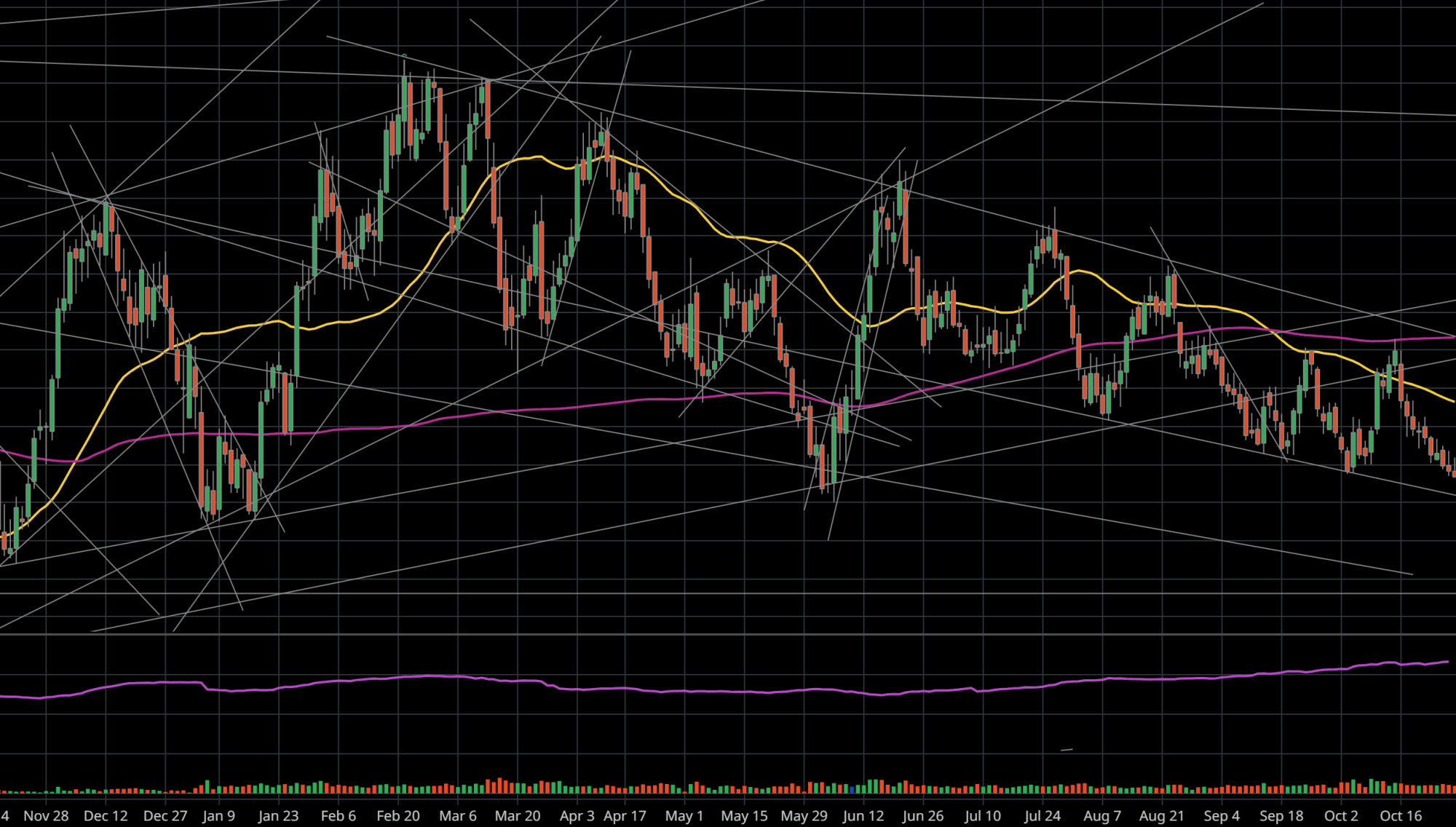
Prices in European emissions trading remained bearish last week and lost a further 2.5% on a weekly closing price basis within the sideways-downward channel.
This channel is currently in the range between 78.25 and 86.65 euros, which should also be the trading range for the coming week. The 38-day line is currently at 83.28 and the 200-day line is at 86.66 euros.
Due to the missing two-weeks-Wednesday Polish auction, a total of only 11,253,500 EUAs will be auctioned on the Leipzig EEX this trading week. The strength of demand at current price levels could be an important indicator of short-term price developments.
(Average Quotes Exchange / OTC)
Instrument
20.10.23
27.10.23
Veränderung
EUA (December-2023-Future)
81,41 EUR
79,35 EUR
-2,06 EUR
VER (Natural Carbon Offsets)
1,59 USD
1,41 USD
-0,18 USD
VER (CORSIA eligible Carbon Offsets)
0,74 USD
0,65 USD
-0,09 USD
nEZ (German National Carbon Units)
30,00 EUR
30,00 EUR
+0,00 EUR
ICE Brent Crude Oil (Benchmark Future)
92,38 USD
88,79 USD
-3,59 USD
EURO (Currency, Forex)
1,0596 USD
1,0578 USD
-0,0018 USD
(The VER quotes are average rates (carboncredits.com), which can be used within the framework of CORSIA and voluntary carbon offsetting. EUA, Crude Oil and Euro Currency shows day-end-exchange quotes. This market information has just an informational character and are no advice or offer to trade carbon emission rights or their futures and options. If you want to unsubscribe, please reply to this mail.)
Please call our international carbon desk if any further questions exist: +49.2831.1348220.
In the first six months of this year, emissions from electricity generation in the European Union fell by 17%, due in particular to the further expansion of renewable energies and the lower use of coal at EU level. This corresponds to a decrease of approximately 59 million tons of CO2.
But it is not only the EU that has made a positive presentation here, but also one of the world’s main emitters of greenhouse gases, the USA. Here, carbon emissions from electricity generation also fell by 8.6% in the first half of 2023, which was due to the 27% decline in coal-fired power generation. And in Japan, emissions from fossil fuels in electricity generation also fell by a remarkable 12%, as the energy think tank Ember reported. As a result, Japan emitted 25 million tons of carbon less in the first half of 2023.
Globally, this has meant that carbon emissions from electricity generation have remained almost unchanged and may have reached their peak here.
However, the German federal government is clearly missing its emissions reduction targets in the buildings and transport sectors, even though the federal government has presented a new climate protection program. There remains around 200 million CO2 too much, which makes achieving the climate protection goals a long way off, as does the goal of being net zero by 2045.
The new EU Climate Commissioner Wopke Hoekstra has now spoken out in favour of a target of 90% reduction in greenhouse gas emissions by 2040. According to calculations by analysts of the London Stock Exchange, this would mean a price for a ton of carbon emission or its equivalent in other greenhouse gases (CO2e) of more than 400 euros per ton.
Currently, the prices for European Emission Allowances remain under pressure and ended with a loss of 1.21 euros or 1.5% based on the weekly closing price. Last Tuesday, the benchmark future EUA-December-2023 closed below the 80-euro-mark for the first time since the beginning of February, but was able to assert itself above it again from Wednesday, even if Brent oil lost a significant 8.5% on a weekly basis.
What will be interesting next week will be to what extent the Hamas attack on Israel contributes to the uncertainty in the financial, energy and commodity markets regarding a potential expansion.
Last Wednesday, a primary market auction of 1,000,000 EUA for Northern Ireland took place on the European Energy Exchange for the first time this year. Due to the Polish auction next Wednesday, a total of 14,599,500 EUA will be auctioned on all trading days this week.
(Average Quotes Exchange / OTC)
Instrument
29/09/23
06/10/23
Change
EUA (December-2023-Future)
81.67 EUR
80.46 EUR
-1.21 EUR
VER (Natural Carbon Offsets)
1.82 USD
1.74 USD
-0.08 USD
VER (CORSIA eligible Carbon Offsets)
0.75 USD
0.74 USD
-0.01 USD
nEZ (German National Carbon Units)
30.00 EUR
30.00 EUR
+0.00 EUR
ICE Brent Crude Oil (Benchmark Future)
92.29 USD
84.45 USD
-7.84 USD
EURO (Currency, Forex)
1.0589 USD
1.0588 USD
-0.0001 USD
(The average exchange quotes and OTC-prices shows the average between bids and ask of several exchanges and OTC markets for carbon emission rights in the ETS. Bid and ask has usually in Spot Market a visible spread. The VER quotes are average rates (carboncredits.com), which can be used within the framework of CORSIA and voluntary carbon offsetting. Crude Oil and Euro Currency shows day-end-exchange quotes. This market information has just an informational character and are no advice or offer to trade carbon emission rights or their futures and options. If you want to unsubscribe, please reply to this mail.)
Please call our international carbon desk if any further questions exist: +49.2831.1348220.
This time, the proposal by the EU Parliament to reform the EU emissions trading scheme was adopted by a large majority of 439 votes in favour, 159 against and 32 abstentions.
This is an important step towards reforming emissions trading. This position is now going into the forthcoming negotiations with the EU countries, where dissenting voices are to be expected, particularly in countries that are highly dependent on fossil fuels.
However, the opponents of a tightening of emissions trading should not forget that otherwise the goals of the Paris climate protection agreement would not even begin to be achievable. A further weakening of this second compromise proposal, which of course was again based on the lowest common denominator, would also considerably weaken not only Europe’s role model function but also its negotiating position as the third largest global emitter of greenhouse gases.
The prices for European emission allowances (EUA) showed a slight recovery in the past week on a weekly closing basis, as in the week before. The December 2022 benchmark futures contract on the ICE traded in a range of EUR 81.20 and EUR 85.43.
This week, a total of 8.83 million EUAs will be auctioned at the Leipzig EEX.
(Average Quotes Exchange / OTC)
Instrument
17/06/22
24/06/22
Change
EUA (Spot-Market)
82.24 EUR
83.29 EUR
+1.05 EUR
EUA (December-2022-Future)
82.37 EUR
83.43 EUR
+1.06 EUR
VCU (Voluntary Carbon Units ø)
9.20 USD
8.78 USD
-0.42 USD
VER (Gold Standard Spotmarkt ø)
4.45 USD
3.96 USD
-0.49 USD
nEZ (German National Carbon Units)
30.00 EUR
30.00 EUR
+0.00 EUR
ICE Brent Crude Oil (Benchmark Future)
114.54 USD
113.05 USD
-1.49 USD
EURO (Currency, Forex)
1.0495 USD
1.0506 USD
+0.0011 USD
(The average exchange quotes and OTC-prices shows the average between bids and ask of several exchanges and OTC markets for carbon emission rights in the ETS. Bid and ask has usually in Spot Market a visible spread. The VER quotes are average rates (carboncredits.com), which can be used within the framework of CORSIA and voluntary carbon offsetting. Crude Oil and Euro Currency shows day-end-exchange quotes. This market information has just an informational character and are no advice or offer to trade carbon emission rights or their futures and options. If you want to unsubscribe, please reply to this mail.)
Please call our international carbon desk if any further questions exist: +49.2831.1348220.
The terrible war in Ukraine and the still omnipresent corona pandemic dominates the news, leaving little time for other topics. That is why we are pointing out the climate crisis in particular today, which will continue to develop in the direction of a catastrophe if we do not see Corona and the war in Ukraine and the associated problems with the supply of fossil fuels as an opportunity to immediately set the course towards to decarbonize the world.
From the beginning of industrialization to 2019, humanity released a total of 2,400 gigatonnes of greenhouse gases. In the period from 1850 to 1989, i.e. within 140 years, there were 1,400 gigatonnes of CO2e, i.e. 58% of the total emissions. Over the last three decades from 1990 to 2019, we released the remaining 1,000 gigatonnes of CO2e into the atmosphere. And the last decade sets another, sad record – in the period 2009-2019 it was 410 gigatonnes of CO2e, which is 17% of the emissions between 1850 and 2019.
Last week, the German federal government decided on the course for the reassignment of CO2 pricing in the building sector, which is now to begin in 2023. So far, this has been borne entirely by the heating costs of the tenants, but from next year there will be a phased model that passes the burden on to the landlord in terms of how harmful his building is to the climate.
If an apartment has a poor energy balance of more than 52 kilograms of CO2 per square meter, the landlord now pays 90% and the tenant only 10% of his heating costs. This should then be reduced in up to 10 steps down to 0% for the landlord, insofar as the building complies with the EH55 energy standard or better. In this case, the tenant continues to bear all costs for CO2 pricing in accordance with the Fuel Emissions Trading Act (BEHG).
Germany was the first country in Europe to introduce national emissions trading through BEHG, and the European Union is now toying with the idea of introducing this across the EU in order to ensure that CO2 emissions in the building and transport sectors are priced accordingly in all countries. It will be interesting to see how quickly this will be implemented.
Due to the Easter holidays, there will only be an auction on EEX on four days this week and the following week; in the coming week there will only be three auction dates for EU emission allowances. Accordingly, the prices have now been slightly bullish and closed above the 80-euro-mark on Friday.
(Average Quotes Exchange / OTC)
Instrument
01/04/22
08/04/22
Change
EUA (Spot-Market)
78.28 EUR
80.15 EUR
+1.87 EUR
EUA (December-2022-Future)
78.49 EUR
80.09 EUR
+1.60 EUR
VCU (Voluntary Carbon Units ø)
10.99 USD
11.45 USD
+0.46 USD
VER (Gold Standard Spotmarkt ø)
6.29 USD
5.98 USD
-0.31 USD
nEZ (German National Carbon Units)
30.00 EUR
30.00 EUR
+0.00 EUR
ICE Brent Crude Oil (Benchmark Future)
104.38 USD
102.27 USD
-2.11 USD
EURO (Currency, Forex)
1.1028 USD
1.0875 USD
-0.0153 USD
(The average exchange quotes and OTC-prices shows the average between bids and ask of several exchanges and OTC markets for carbon emission rights in the ETS. Bid and ask has usually in Spot Market a visible spread. The VER quotes are average rates (carboncredits.com), which can be used within the framework of CORSIA and voluntary carbon offsetting. Crude Oil and Euro Currency shows day-end-exchange quotes. This market information has just an informational character and are no advice or offer to trade carbon emission rights or their futures and options. If you want to unsubscribe, please reply to this mail.)
Please call our international carbon desk if any further questions exist: +49.2831.1348220.